Rudolph the baby seal discovered in family's back garden... 18 miles from the sea

She's less than a year old but this seal pup's inquisitive nature and adventurous spirit has already landed her in a lifetime's worth of trouble.
READ MORE - Rudolph the baby seal discovered in family's back garden... 18 miles from the sea

Sun and moon 'set off deep tremors on San Andreas fault'

For thousands of years astrologers have claimed that disasters are foretold in the movement of the planets.
Now a new study suggests they might be right.
Scientists have discovered that the faint gravitational tug of the sun and moon can set off tremors deep underground in one of the world's most dangerous earthquake zones.
A study of the San Andreas Fault has found a link between the gravitational tug that creates the tides and small tremors
A study of the San Andreas Fault has found a link between the gravitational tug that creates the tides and small tremors beneath the ground
Although the pull of planetary objects is too weak to set off a full blown quake, the findings suggest that they could set in motion a chain of events, leading to devastation on the surface.
The findings come from a study of the San Andreas Fault - the infamous crack in the ground which triggered the 1906 San Francisco earthquake and the deadly fires that followed.
The fault marks the boundary of the Pacific and North America tectonic plates and runs 800 miles from the southern California desert to northern California.
American earthquake experts compared records of 2,000 small tremors in the Parkfield region 170 miles north west of Los Angeles with the movement of the sun and moon over eight years.
The same gravitational tugs that create the tides, also trigger small tremors that originate around 15 miles below the ground, the team report tomorrow in the science  journal Nature.
The gravitational pull that creates tides can also trigger small tremors, according to new research
Dr Roland Burgmann, a professor  of earth and planetary science at University of California, Berkeley, said: 'Tremors seem to be extremely sensitive to minute stress changes.
'Seismic waves from the other side of the planet triggered tremors off the coast of Washington state after the Sumatra earthquake last year, while the Denali earthquake in 2002 triggered tremors on a number of faults in California.
'Now we also see that tides - the daily lunar and solar tides - very strongly modulate tremors.'
The sort of tremors monitored by the scientists are normally linked to volcanic activity - not earthquakes. They usually warn of a forthcoming volcanic eruption.
The researchers believe the rock 15 miles below the surface is lubricated with highly pressurised water that allows it to slip around with little effort.
That explains how the faint tug of the sun and moon can cause the rocks to slip.
A spokesman for the researchers said: 'Though tides raise in the Earth by the sun and moon are not known to trigger earthquakes directly, they can trigger swarms of deep tremors which could increase the likelihood of quakes on the fault above the tremor zone.'
Earthquakes are caused by the movements of the earth's tectonic plates, and often occur where two plates are rubbing against each other.
Research hope the new study will inch them closer to the Holy Grail of geology - a way of predicting major quakes before they happen.
Scientists are currently only able to work out probabilities of an earthquake by calculating how much stress is building on a fault.
READ MORE - Sun and moon 'set off deep tremors on San Andreas fault'

DearSteveJobs.com - The first step for speedy iPhone app approval

Swedish ad agency Forsman Bodenfors turned to Fi to help with a campaign that reaches out to none other than Apple CEO Steve Jobs – asking him to approve the upcoming iPhone app. As SVT Play is one of our favorite web services, we jumped at the chance to work on such an interesting and unusual project.

Knowing that iPhone apps can sometimes take a while to be approved, Fi built a campaign site in record time, – www.dearstevejobs.com – to get Steve Jobs’ attention and ask him to hurry the approval procedure along. Using a pretty unusual design approach, the final site speaks more to the amateur activist in all of us rather then dazzle with smooth design details.

So how do we get Steve’s attention and persuade him to approve the app? Firstly we get visitors to record a quick message to Steve, to show him how to say ‘Ja’ (Swedish for yes). And through the power of Facebook, Twitter and the blogosphere we aim to kick-start a social movement by putting those tools front and center on the site.

Once Steve is ready to get the app approved, all he has to do is go to the site and press the big ‘Ja’ button and record his message of approval. We can’t wait to hear him say ‘Ja’!
READ MORE - DearSteveJobs.com - The first step for speedy iPhone app approval

The top-grossing actress of 2000s is...

…”Harry Potter” star Emma Watson. The 19-year-old starlet’s role as Hermione Granger in the wildly popular film franchise pushed her to the top spot, edging out second place finisher Keira Knightley and more seasoned stars like Julia Roberts and Reese Witherspoon.
Prior to scoring the coveted role of Hermione at the age of 9, Watson’s only acting experience was in school plays. Watson will return to the screen for parts one and two of “Harry Potter and the Deathly Hallows” and is currently spending her non-acting time studying art and literature at Brown University.
READ MORE - The top-grossing actress of 2000s is...

Crazy story if true: Chris Henry died from falling from moving pickup truck wife was driving

Crazy story if true: "On December 172009 Cincinnati Bengals receiverChris Henry died from injuries sustained from adomestic dispute with his fiance, Loleini Tonga. His official time of death was 6:36 AM, reported police.1 The cause of death is was from injuries sustained from falling out of a moving pickup truck, which his wife is believe to have driven.2 Henry was seen jumping into the bed of the pickup truck as Tonga drove away from their house, where tire marks were found in the yard.1 Henry was found on Interstate 85 just outside Charlotte, less than a mile away from his house, where police say he "came out the back" of the moving vehicle.3
READ MORE - Crazy story if true: Chris Henry died from falling from moving pickup truck wife was driving

Exploded!

A series of photographs entitled "Exploded" by American photographer Adam Voorhis. An interesting visual experience, which shows the elements and the inner workings of different objects.
post by clementine.
READ MORE - Exploded!

10 worst phrases to use at work

Oh, we may think we’re sounding snazzy and professional. But then why does everyone think we’re baffoons? CNN ruminates on the 10 phrases to shun at work. Here are a couple of them:
- Sweat equity
- It’s not rocket science
- Throw it against the wall and see what sticks
Why does this author think these phrases are so bad? Check out the full piece to read the rest of the annoying phrases and their explanations.
READ MORE - 10 worst phrases to use at work

Copenhagen: Police arrest 100 protesters, fire tear gas


COPENHAGEN: Danish police battled demonstrators outside the UN climate summit on Wednesday as ministers toiled to reach agreement on an accord to stave off catastrophic global warming. ( Watch Video )

Police with dogs fired tear gas and arrested around 100 marchers near the Bella Center amid growing unease brewed over the snail-like progress -- and on some issues, utter deadlock -- at the marathon negotiations.

Around 1,500 climate demonstrators tried to march on the closely guarded conference centre where top leaders gathered.

Police set up posts on bridges and roads leading to the venue, stopping cars and buses for checks. Police were especially on alert in the working class area of Noerrebro, where many foreign activists are staying.

Some of the world's leaders, arriving ahead of Friday's climax when some 120 chiefs will be in attendance, began to portray the negotiations in a sombre light.

British Prime Minister Gordon Brown acknowledged a deal would be "very difficult," while his Australian counterpart Kevin Rudd said there was "no guarantee" of accord.

UN Secretary-General Ban Ki-moon said the talks were a "defining moment in history" that could not be ignored by any country.

But he admitted an agreement on financial aid for developing countries may have to wait until a later date.

If all goes well, Friday's summit will conclude with a post-2012 strategy for shrinking climate change from mortal peril to a manageable threat.

It would set down the outlines of an accord on curbing carbon emissions that cause global warming and craft a mechanism to provide billions of dollars for poorer countries in the firing line of climate change.

Further negotiations would unfold in 2010 for agreeing on details.

Scientists warn that many millions of people face going hungry, losing their homes and access to water within the next decade if nothing is done to stem the rise in greenhouse gas emissions.

But nine days of talks among lower-level officials and informal negotiations among groups of ministers have failed to produce a breakthrough on any of the key -- and tightly intertwined -- issues.

"I am just a little bit worried, because there is still so much work to do," French climate ambassador Brice Lalonde told AFP.

"I fear there could be another blow-up, just when we are struggling to get an agreement."

Some of the bitterest wrangling has been between the world's two biggest carbon emitters, China and the United States, who declared on Tuesday they would not shift on their emissions pledges, the thorniest problem of all.

US President Barack Obama has offered to cut US carbon emissions by 17 percent by 2020 over a 2005 benchmark, a figure that aligns with legislation put before the US Congress.

It amounts to a reduction of around four percent compared with the more widely used reference year of 1990. The European Union has pledged to cut its emissions by 20 percent on 1990 levels by 2020.

The 12-day confab in a giant convention centre on the outskirts of Copenhagen has been mired with organisational problems with the number of people accredited outstripping capacity by around 30,000.

Thousands of activists from non-governmental organisations were being forced to leave the venue on Wednesday to accommodate the influx of VIPs, further fuelling anger among those who already feel their voices are not being heard.

Many of those now excluded joined a march by around 1,500 activists towards the summit venue, led by non-governmental groups in Denmark and developing nations.
READ MORE - Copenhagen: Police arrest 100 protesters, fire tear gas

Boeing's 787 Dreamliner takes flight for the first time

It's not every day a major new aircraft takes the skies for the first time, but today's special: Boeing's 787 Dreamliner is currently taking its very first test flight over the skies of Everett, Washington. Over 55 airlines including Continental and Northwest / Delta have already purchased some 840 of the next-gen planes, with All Nippon Airways scheduled to take the first delivery. The test flight is scheduled to land in a couple hours -- we're assuming work to mount Boeing's airborne laser system on the nose in order to defeat hackers will begin shortly thereafter.
READ MORE - Boeing's 787 Dreamliner takes flight for the first time

Apple Gestapo: How Apple Hunts Down Leaks


They call themselves the Worldwide Loyalty Team. Among some employees, they are known as the Apple Gestapo, a group of moles always spying in headquarters and stores, reporting directly to Jobs and Oppenheimer. Here's how they hunt people down.
"You may want to know about their Worldwide Loyalty Team," Tom told me recently in an email. I read what he had to say. It felt like a description of the Gestapo, without the torture and killing part.
Tom never lived in Nazi Germany, back in the time when the Geheime Staatspolize had the power to get into any house or any office, at any time of the day or night, without any warrant or reason, to seize whatever or whoever they wanted in their never ending search to find enemies of the state. A place in which you had no right to privacy whatsoever. A place in which you were guilty until proven otherwise.
No, Tom never lived in Nazi Germany, nor in East Germany, nor in the Soviet Union, nor in Communist China. He lives in the United States. For sure, he has never been scared of losing his life nor the ones he loves, like thousands of millions in those countries. But he knows how it feels to be watched, to always be considered guilty of crimes against another kind of state. He knew how it felt to have no privacy whatsoever when he was working right here, in a little Californian town called Cupertino, in a legendary place located in One Infinite Loop.
Tom knew about all that pretty well, back when he was working at Apple Inc.

Operation Lockdown

Of course, if Tom had never sent any sensitive information to media outlets, he would have never had the fear of being caught, only to get fired and sued into oblivion by Apple Legal. But the lack of any privacy whatsoever is something that he shared with all his fellow employees.
"Apple has these moles working everywhere, especially in departments where leaks are suspected. Management is not aware of them," he told me, "once they suspect a leak, the special forces—as we call them—will walk in the office at any hour, especially in the mornings. They will contact whoever was the most senior manager in the building, and ask them to coordinate the operation."
The operation, as Tom calls it, is not anything special. It is not one of a kind event. It's just a normal practice, and the process is pretty simple: The manager will instruct all employees to stay at their desks, telling them what to do and what to expect at any given time. The Apple Gestapo never handles the communication. They are there, present, supervising the supervisors, making sure everything goes as planned.
All cellphones are then taken. Usually, they collect them all at the same time, which means that the process could take a long time. If you need to contact the exterior during the time your cellphone is under examination, you will have to ask for permission, and your call will be monitored.
They don't ask for cameras because there are no cameras at Apple: Employees are not allowed to get into the campus with them. If the cellphone is an iPhone, it gets backed up onto a laptop. "In fact, at the beginning they used to say that the iPhones were really their property, since Apple gave every employee a free iPhone," he points out. All the employees are asked to unlock and disable any locking features in their cellphones, and then the special forces will proceed to check them for recent activity.
They back up everything and go through all the other phones' text messages and pictures. If you have porn in your phone, they will see it. If you have text messages to your spouse, lover, or Tiger Woods, they will see them, too. Just like that. No privacy, no limits.
While all this is happening, the employees are ordered to activate the screensaver on their computers, so the special forces are sure there are no chats happening between employees or with the exterior. They are told not to speak, text or call one other when the lockdown is happening: "It is like a gag order, and if the employee does not want to participate, they are basically asked to leave and never come back."

2009 Is Like "1984"

Of course, all this is voluntary. Management recommends that you relinquish your phones. If you don't do it they will fire you, or they will investigate why you didn't want to give them your cellphone. Simultaneously, everyone is asked to sign NDA's during the investigations, even though they already signed Apple NDAs to work there.
"I was at several events. When they find what they are looking for—which they usually do—the person is asked to stay until the end of the business day. Then he is asked to leave the premises quietly, escorted by security," Tom says. While he's there, the special forces hang around, watching. "There is a lot that goes behind doors that I don't really know about. I do know, however, that they really interrogate people that are serious suspects, intimidating them by threatening to sue."
There is no way to know how often this happens, however, as everything is handled very quietly. The same Worldwide Loyalty Team does many other things to keep everyone in check, from searching out the email history of every employee—which is also a normal practice in other corporations and government agencies—to seeding fake images to catch potential leaks and diffuse the hype about some product introductions.
As Tom was describing all this, my mind was getting back to all I've read about Steve Jobs and Apple, back when he was El Capitán of the brave group of free pirates who created the Macintosh. The Mac was a secret project too, but there was no secret police making sure there were no leaks. After a hard day of work, all the Mac team sometimes played on the beaches of California, careless and happy, confident that this new revolutionary computer would change the world, one desktop at a time. All of them shared information, there were no seeeecrets, and that's why they came up with an "insanely great" computer, as Steve Jobs himself used to refer to it.
And while I understand that secrecy is paramount to success in today's extremely competitive market—hello, dear marketdrones—now I look at this story on the Worldwide Loyalty Team, and it makes me realize how much Apple has changed. From a happy hippie company, to a company that does KGB-style lockdowns and Gestapo interrogations that end in suicides.
I wonder if the special forces have ever chased anyone through the Infinite Loop campus, dressed in their full regalia:


I wouldn't be surprised.

READ MORE - Apple Gestapo: How Apple Hunts Down Leaks

You've Outgrown Your Home Office. Now What?

By Lisa Druxman

Many mompreneurs start and run their businesses from home. After all, that's the goal of their business: to be home with their family. But as your business grows, you might decide to leave your home nest and move into professional office space. That was the case for my business, which just moved to an office after eight years of being home-based.
So far, the experience has been nothing short of wonderful. I'm excited about getting to work every day and wish there were more hours I could spend at the office. It's amazing to be in a place that really fosters the creative energy of my team. I am re-energized.
But the timing had to be right.
In the early years, my goal was to be home with my babies. Even if I had help, I wanted to be there when they woke up from a nap or to join them in the kitchen for lunch. My hours, like their schedules, were not dependable. Work was accomplished in bits and pieces.
Now that both of my kids are in school, I'm able to keep a more traditional schedule. I'm not sure what happened. But I suddenly reached a tipping point and realized that my home no longer fit my business. While Stroller Strides is usually very strategic, in this case I just took a leap into the new space. I share with you now some of the things you need to think of when it's time to leave home:
  • This is where you are going to work on a daily basis. You want to make sure it's the right space for you. In most cases, your office will not bring you revenue. So it's important to make sure you can afford the added expense.
  • It's not just the cost of the office you need to consider. It's everything that goes into keeping the office running: furniture, phone systems, computers and more. Ongoing, you may be responsible for the gas and electricity, trash, water, phone bills, etc.
  • Plan conservatively, because you will probably have more expenses than you anticipated. You want to be sure you have the right space and the right amount of space. But you don't want to be locked into a long-term agreement if you need out or need to grow further.
Questions to ask yourself:
  • Why do I need office space?
  • What would I use it for?
  • How much space do I need?
  • How far do I want to commute?
  • Will I need meeting space? Will clients come to see me?
  • Do I need my own space or can I share space, such as an executive suite?
  • What licenses or permits do I need?
  • How much can I afford? Do I have the cushion to handle months when cash flow might be tight?
Find a commercial real estate agent who knows both your needs and the neighborhood. He or she can help you search for what's available and negotiate your lease.
The most important thing is that your business works, not where you work in your business. If you plan it right, the flight out of the nest is a great one.
Lisa Druxman is Entrepreneur.com's "Mompreneur" columnist and the founder and CEO of fitness franchise Stroller Strides. Druxman is also a nationally recognized speaker and author, and is considered an expert in the field of fitness, particularly pre- and postnatal fitness. She hosts a free monthly webinar during which she answers questions from fellow mompreneurs. If you are interested in participating, contact her at lisa@strollerstrides.com.
READ MORE - You've Outgrown Your Home Office. Now What?

Number Of Kids Killed By TVs Increasing Even Amid LCD Fad

PHILADELPHIA — The number of children killed or injured by falling television sets appears to have risen even as more consumers replace their clunky old TVs with lighter flat screens, studies suggest.
The reason for the rise isn't clear but could result from traditional TV sets becoming heavier and, an industry official suggests, households choosing a flat screen for their main TV and relegating old sets to rickety furniture in other rooms.
A team from the Center for Injury Research and Policy at Nationwide Children's Hospital in Ohio reviewed data from 100 emergency rooms and estimated that about 14,700 furniture-related injuries occurred each year between 1990 and 2007 – almost half due to TV sets, the most common article involved in the accidents – and resulted in about 300 deaths.
The research, published in October in the journal Clinical Pediatrics, showed that the number and rate of injuries to youngsters from falling furniture increased significantly over the period. The rate generally rose from 18.8 per 100,000 people in 1990 to 22.9 in 2007, peaking at 25.7 in 2004.
A similar report from the U.S. Consumer Product Safety Commission last year estimated 42,700 injuries and 180 deaths associated with appliance, furniture and television instability and tip-overs from 2000 to 2006; 87 of the deaths involved televisions. The number rose from seven in 2000 to 23 in 2006.
Several children have been killed or injured in recent weeks alone. A 2-year-old New Jersey boy died Dec. 7 when he tipped over a chest of drawers holding a large TV set. A 10-month-old Philadelphia boy was critically injured Dec. 10 when a television fell onto him. An 11-month-old Phoenix girl died a month ago after her 2-year-old brother pulled a television off its stand while trying to change the channel.
Other recent accidents killed a 6-year-old California girl and seriously injured a 3-year-old in Florida.
"Every day, in this country, about 40 young children are rushed to emergency departments with injuries after a heavy piece of furniture has fallen on them," said Gary Smith, director of the Ohio injury research center and a member of the team that conducted the study. "This is not a small problem; it's a common problem, and it's increasing."

Many of the injuries have involved heavy standard cathode-ray tube TVs, which are weighted to the front and can be tipped forward by a child, said Arlene Flecha, spokeswoman for the safety commission, which is doing another study following up on furniture injuries to gain more details, such as the types of televisions involved.
The burgeoning popularity of flat-screen televisions could eventually lead to fewer injuries because they are not as front-heavy, the study said.
Newer cathode sets are larger and heavier than old models. And while 53 percent of consumers now own flat-panel models, roughly half of them probably still own the older models and might be shifting them from a proper TV stand into a bedroom or other room and placing them less securely atop a table or dresser, said Megan Pollock, a representative of the Consumer Electronics Association.
Of the deaths studied by the Ohio group, 93 percent were due to dressers and TVs falling onto children, and almost all victims were 3 or younger and died of head injuries or suffocation.
For Sylvia Santiago, of West Haven, Conn., news accounts of the recent deaths reminded her of the crash that awakened her in July at a friend's home. A heavy TV set had fallen from a low stand, and it took Santiago a while to see her 2 1/2-year-old daughter lying beneath it.
"When I looked down, all I saw was her legs underneath the TV," said Santiago, 23. Her daughter, Janiyah Powe-Santiago, died a week later.
Parents should anchor heavy televisions to the wall, said Smith, the researcher, adding that anchoring devices should be sold along with TVs.
"Just like we wouldn't sell a motor vehicle without a seat belt in it, there is no safe way to put a large piece of furniture in a home where children live and play and have that be a safe environment," he said. Parents should also never put a remote control, toy or other enticing object on a TV, dresser or shelf that a child might try to reach, he said.
Pollock said the industry has been trying for years to educate consumers about the problem through public service campaigns and instructions included with TVs.
While the dangers could fade as the lighter flat panels dominate more of the market, Flecha pointed out that even some of them are "humongous" and should also be placed with care.
Santiago, now studying to be a paralegal, said she never thought about the danger posed by a heavy television set on a low stand. She said she struggled through Janiyah's birthday last month and that the approaching holidays feel like "round two."
"People think 'It will never happen to me; I'll have my child forever; something like this will never happen to my child,'" she said. "Well, it did happen to me, so I don't want anyone to think twice about securing their furniture."
READ MORE - Number Of Kids Killed By TVs Increasing Even Amid LCD Fad

Robin Hood Trailer (VIDEO): Ridley Scott, Russell Crowe Film Releases First Preview

The first trailer for Ridley Scott's "Robin Hood" has been released and it looks to be a classic Scott epic filled with lots of gritty violence. Starring Russell Crowe, who Scott worked with in his previous film "Gladiator," as the legendary archer and Cate Blanchett as Maid Marian, the film is scheduled to be released May 14, 2010.
More from IMDB here. What do you think: does it look better than the classic version with Kevin Costner? Let us know in the comments.
WATCH:
The first trailer for Ridley Scott's "Robin Hood" has been released and it looks to be a classic Scott epic filled with lots of gritty violence. Starring Russell Crowe, who Scott worked with in his p...
READ MORE - Robin Hood Trailer (VIDEO): Ridley Scott, Russell Crowe Film Releases First Preview

The Biggest Edition of The Biggest Loser Ever!

Last Tuesday, Danny Cahill became the biggest Biggest Loser ever when he dropped 239 lbs. in 7 months to win the eighth season title. Now, as NBC goes back to a couples edition of the series, the contestants and the challenges they face get bigger as well.
On Jan. 5, The Biggest Loser: Couples premieres with 11 teams of two competing for the Season 9 crown. Among the players are Michael Ventrella, a 30-year-old deejay from Chicago, who at 526 lbs. becomes the heaviest contestant ever on the series, and his is mother, Maria, a 51-year-old corporate travel agent.
“I would do anything for Michael,” his mom Maria, who starts at 281 lbs., tells PEOPLE. “At first I didn’t think I could do it because I have too many responsibilities at home. I have a husband who is disabled, my mom in a wheelchair, a full-time job, home cleaning — it’s a lot. But then he needed it so bad and so I am here, and I need it for myself, too!”
The Ventrellas are one of eight parent-child duos on the show this season.
Attorney Melissa Morgan, 39, and her husband Lance, 38, a rancher, hail from Aspermont, Texas, and are both interested in losing weight and saving their marriage.
California-based cousins Sam Poueu, 24, and Koli Palu, 29, were inspired by the success of Tongan cousins Sione and Filipe in Season 7 and hope to do the same for the people and culture of American Samoa.
Orlando, Fla., identical twins James and John Crutchfield, 30, weighed in at a combined 969 lbs. “I’m glad I’m here,” says James, “because my only other alternative is surgery.”
Here are the other teams vying for a $250,000 winner prize or $100,000 at-home prize:
Mom Patti Anderson, 55, a business owner, and daughter Stephanie Anderson, 29, a radio sales executive, from Lafayette and West Hollywood, Calif.
Mom Cherita Andrews a 50-year-old homemaker and daughter Vicky Andrews, a 22-year-old student from Houston, Texas.
Mom Miggy Cancel, 48, a Pemberton, N.J. chef and daughter Migdalia Sebren, 28, a homemaker from Sanford, N.C.
Mom Cheryl George a 50-year-old store-owner and son, Daris George, 25, a salesman, from Ardmore, Okla.
Father O’Neal Hampton, Jr., a U.S. Postal Service station manager, 51, and daughter SunShine Hampton, 24, a restaurant server, from Minneapolis, Minn.
Father Darrell Hough, a press operator and mechanic, 46, and daughter Andrea Hough, a 24-year-old executive assistant from Ann Arbor, Mich.
Mom Sherry Johnston, a 51-year-old non-profit administrator and daughter Ashley Johnston, a 27-year-old manager and esthetician from Knoxville, Tenn.
Also, season 7’s Tara Costa will return to PEOPLE.com to blog for season 9! –- Cynthia Wang
READ MORE - The Biggest Edition of The Biggest Loser Ever!

FAIL Blog’s Top Ten FAIL Lists for 2009

Drum roll please! The votes have been tabulated and FAIL Blog has the official results for our first annual Top Ten Lists of the Biggest FAIL Moments, the Biggest FAIL People and the Most Epic FAIL Blog Videos and Pictures for 2009 as voted on by 100,000 FAILers. It was a year of many fails, but Kanye West won the grand prize of “King of Fail” for 2009.

Top 10 Most Memorable FAIL Moments of 2009:
1. Kanye West’s Outburst at the Video Music Awards 37%
2. Bolivian Newscast Airs “Lost” Scene as Flight 447’s Last Moments 13%
3. Richard Heene’s Balloon Boy Hoax 11%
4. Photo Opportunity for Air Force One Mistaken for Terrorist Attack 8%
5. Illinois Governor Rod Blagojevich Tries to Sell Obama’s Senate Seat 7%
6. Northwest Flight to Minneapolis Overshoots Airport by 150 Miles 7%
7. Gordon Brown’s Hand Shake Fail 4%
8. Christian Bale’s Freak Out on Terminator Set 3%
9. South Carolina Governor Mark Sanford Affair with Argentinean 3%
10. White House Crashers Michaele and Tareq Salahi 2%
Top 10 Most Memorable FAIL People:
1. Kanye West 16%
2. Jon Gosselin 12%
3. Glenn Beck 12%
4. Perez Hilton 11%
5. Octomom Nadya Suleman 10%
6. Chris Brown 9%
7. Heidi Montag and Spencer Pratt 7%
8. Lindsay Lohan 7%
9. Carrie Prejean 5%
10. Roman Polanski 4%
Top 10 Most Memorable Videos and Photos on FAIL Blog

Incorrect source or offensive?


READ MORE - FAIL Blog’s Top Ten FAIL Lists for 2009

100 hacks to help you create the ultimate home office

Many small business operators work from home, which is really convenient unless you have a lacklustre work space. To help you put together a space that inspires creativity, fuels productivity, and helps you maintain focus—here are one hundred hacks to help you create the ultimate home office.
1. Set up a budget. Before you hit up the stores, crunch out an overarching budget and then break it down by deciding what you’ll spend on paint, furniture, etc.
52. Clean up wires. Get retractable cords or just bind cords together and tuck them away behind furniture. This will increase the aesthetic appeal of your office while ensuring no one trips inside of it either.
Read on for all one hundred tips and tricks to get your work space in tip top shape.
READ MORE - 100 hacks to help you create the ultimate home office

Are the politics of climate negotiations as scientific as you think?

Perhaps it depends on whom you talk to. Over in Copenhagen, politicians gathered to craft climate agreements among 193 countries. Turns out, the number of allotted gas emissions is tied closely to industrial production—thus developing countries get the economic shaft when they’re give the same standards of emissions as other countries. The Scientific American covers some of the new thinking and new arguments this year in the battle for the atmosphere.
Arugued one constituent,
“Every human being has an equal right to the resources of the atmosphere,” says Dasgupta, arguing for a per person emissions limit. “How will this resource, which for the first time in history has become a resource which is limited in supply, how is to be divided in the global community?”
Think you’re getting your fair share of gas emissions? Or are they bartering away our earth?
Save time reading news by creating a personalized MyAlltop page.
READ MORE - Are the politics of climate negotiations as scientific as you think?

Stolen Moments NYC - Yasmine Chatila


"After months of continuous observation in different parts of the city I collected hundreds of photographs of strange, comical, and often haunting moments."

I think this is an intresting and controversial idea:
http://www.yasminechatila.com/works_stolen_moments.html

Press Release:
On a quiet winter night, I looked out a window. I could see a building far away, the windows where illuminated, and I could vaguely make out people inside their apartments. When I imagined what they might be doing, my mind fluttered between wild fantasies and mundane clichés. I was curious to compare my expectations to the reality of their lives.
After months of continuous observation in different parts of the city I collected hundreds of photographs of strange, comical, and often haunting moments.
At times, I was lucky enough to catch a glimpse of human nature when it was not guarded, not self-conscious and completely uninhibited. This provided me with a stage where it was possible to observe myself in the most secret and vulnerable moments of others.

In order to render the subjects unrecognizable, and in an attempt to render them more archetypal, they are taken out of context and displaced from their original habitat.
READ MORE - Stolen Moments NYC - Yasmine Chatila

Top Ten Movies

Top Ten Movies

These are my top ten movies since 1980, mainly because these specific films were a large source of inspiration. And not because they are cinematic masterpieces - Even though some of them are. The list is based only upon what has given me most joy, insight and perspective on life.

1. Paris, Texas - Wim Wenders 1984

2. Eternal Sunshine of the Spotless Mind - Michel Gondry 2004
3. Eyes wide shut - Stanley Kubrick 1999
4. Mulholland Dr. - David Lynch 2002
5. Garden State - Zach Braff 2004
6. Lost in translation - Sofia Coppola 2003
7. No country for old men - Cohen bros. 2007
8. True Romance - Tony Scott 1993
9. Blade runner - Ridley Scott 1982
10. Amélie - Jean-Pierre Jeunet 2001
READ MORE - Top Ten Movies

Holy Kaw! All the topics that interest us 4 tools to defeat denial

Rosabeth Moss Kanter of HarvardBusiness.org has these powerful words to say about denial:
"Arrogance of power fuels denial. Deniers gain followers because the "no change; carry on as usual" message is comforting. Doing nothing different or nothing at all — is easy. Everyone has silent veto power. Deniers can simply sit on their hands, miss meetings, lose reports, or let timetables slip. Presto! No change."
Moved to make changes? Implement these 4 tools for defeating denial.
READ MORE - Holy Kaw! All the topics that interest us 4 tools to defeat denial

Larry Flynt Wins Partial Victory Against Nephews In Court Battle Over New Porn Company


LOS ANGELES — The porn family feud that played out in federal court this week ended in a draw Friday when a jury ruled that Larry Flynt's estranged nephews infringed on their famous uncle's trademark when they launched their own smut business, but did not invade his privacy and were not liable for the substantial attorney fees both sides rang up.
The jury of four men and four women rendered its verdict after a four-day trial, during which they sat next to a big-screen TV that was used to repeatedly display blown-up photos of porn DVD boxes featuring naked women on the front and people engaged in all sorts of contortions on the back.
They listened as Flynt, who was paralyzed when he was shot by a white-supremacist sniper in 1978, sat in his gold-plated, velvet-lined wheelchair on Tuesday and Wednesday and testified that in the porn business his name stands for quality. His nephews, he said, were besmirching it by putting that name on "trashy" adult movies.
"The junk they publish hurts my reputation, which in turn hurts my revenue," the gruff, gravelly voiced porn king testified.
As both sides debated what constitutes an elegant sex film as opposed to a trashy one, jurors sat stone-faced, observing posters for films with titles like "Hot Showers" and "Sex at Your Service."
After about three hours of deliberations Friday, they concluded that Flynt's nephews, Jimmy Flynt Jr. and his brother, Dustin Flynt, did indeed infringe on their uncle's trademark when they produced films with just the word "FLYNT" in large capital letters above the titles.
At the same time, the jury rejected Flynt's contention that his nephews invaded his privacy, a ruling their attorney, Dan DeCarlo, said holds Flynt responsible for all attorney fees.
Overall, both sides claimed victory.

Flynt's attorney, Mark Hoffman, said all his client wanted was to maintain his good name in the porn community, adding that he never asked the jury for monetary damages.
"This has been very hard on Mr. Flynt," he said. "He never wanted to go this far. All he wanted to do was the right thing."
Meanwhile, Jimmy Flynt Jr. said he has already launched a new Web site that he believes meets the requirements of the jury's ruling. Called flyntnation.com, it contains both his and his brother's first names, as well as the disclaimer, "Larry Flynt is not affiliated with and does not endorse this."
"No one wins in this thing," said Jimmy Jr., who bears a striking resemblance to his square-jawed uncle. "It's sad that the family is in this dispute, but we felt strongly that we should be allowed to use our name in our business."
The nephews launched their own company after their uncle fired them from executive positions at Larry Flynt Publications in November 2007. Jimmy Jr., 37, had worked there for 17 years, starting in the mailroom. His 34-year-old brother had been there 10 years.
"I felt they were doing a horrible job," their 67-year-old uncle testified.
Larry Flynt, who started in the porn business more than 40 years ago, owns Hustler magazine and other publications, operates Internet sites and retail stores, produces films, owns pricey real estate and even markets a line of clothing.
Although his privately held company is said to be worth tens of millions of dollars, he fired his nephews' father, Jimmy Flynt Sr., last year, saying he needed to save money to sue Jimmy Sr.'s sons.
"I told him that this lawsuit was going to be expensive to finance it, and the only way I could was to not have him working for the company," Flynt testified during the trial.
READ MORE - Larry Flynt Wins Partial Victory Against Nephews In Court Battle Over New Porn Company

Tiger Woods STATEMENT: Admits Affairs, Taking 'Indefinite Break From Professional Golf'


Tiger Woods has announced on his web site that he is taking an "indefinite break from professional golf." He also directly admits to adultery for the first time, apologizing for the "disappointment and hurt that my infidelity has caused to so many people, most of all my wife and children." Here is the full statement:
I am deeply aware of the disappointment and hurt that my infidelity has caused to so many people, most of all my wife and children. I want to say again to everyone that I am profoundly sorry and that I ask forgiveness. It may not be possible to repair the damage I've done, but I want to do my best to try. I would like to ask everyone, including my fans, the good people at my foundation, business partners, the PGA Tour, and my fellow competitors, for their understanding. What's most important now is that my family has the time, privacy, and safe haven we will need for personal healing.
After much soul searching, I have decided to take an indefinite break from professional golf. I need to focus my attention on being a better husband, father, and person.
Again, I ask for privacy for my family and I am especially grateful for all those who have offered compassion and concern during this difficult period.
More from the AP:
Tiger Woods said Friday he is taking an indefinite leave from golf to work on saving his marriage, using the word "infidelity" for the first time in a statement posted on his Web site. "After much soul searching, I have decided to take an indefinite break from professional golf," Woods said. "I need to focus my attention on being a better husband, father, and person."
Woods and his wife, Elin, have been married five years and have a 2-year-old daughter and 10-month-old son.
The announcement came two weeks after a car accident that set in motion a shocking downfall for the world's No. 1 player, which has included sordid allegations of numerous extramarital affairs. One woman even shared a voicemail she said Woods left her two nights before his Nov. 27 accident.

Woods has not been seen in public since the accident.
"I am deeply aware of the disappointment and hurt that my infidelity has caused to so many people, most of all my wife and children," Woods said. "I want to say again to everyone that I am profoundly sorry and that I ask forgiveness. It may not be possible to repair the damage I've done, but I want to do my best to try."
The PGA Tour said it supported the decision by its biggest star.
"His priorities are where they need to be, and we will continue to respect and honor his family's request for privacy," PGA Tour commissioner Tim Finchem said in a statement, the tour's first public comment since Woods mentioned his "personal failings" on Dec. 2. "We look forward to Tiger's return to the PGA Tour when he determines the time is right for him."
How long Woods will stay away from golf was unclear.
A year ago, he was out of golf for eight months while recovering from reconstructive knee surgery, and television ratings dropped 50 percent during his absence.
READ MORE - Tiger Woods STATEMENT: Admits Affairs, Taking 'Indefinite Break From Professional Golf'

Maruti Kizashi to launch in 2010

Re: Maruti Kizashi


Re: Maruti Kizashi

Kolkata - Maruti won’t come as the first name when you are thinking to buy a luxury Sedan or a sports car in India but they are desperately trying to break the myth by launching this concept car into reality. It is expected to be launched in 2010 and will compete with cars like Honda Civic, Toyota Corrola, Skoda Octavia and upcoming Volkswagen Jetta as it will also be placed in the 10 lakh cars bracket albeit a bit on the higher side as you can expect.
The crossover sports sedan car was first showcased at the Frankfurt Motor Show in 2007 as the concept car and was also showcased in New Delhi in 2008. Kizashi literally depicts an athlete in motion. Let’s take a look at some other details of the car.
The car will be powered by a 2 litre turbo diesel engine or a four valve turbo fired 2 lit petrol Euro V engine. It is likely to have a six speed transmission which will be the first from the Suzuki stable. The large 21 inch alloy wheels will add to thecars’s glamorous look besides being lightweight and tough at the same time.
Maruti Kizashi is expected to roll out from its Manesar plant in India. Hope that this car won’t suffer something like nano has faced in India.
READ MORE - Maruti Kizashi to launch in 2010

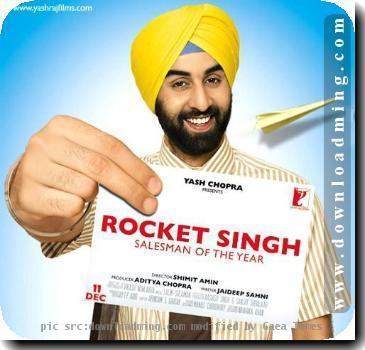
Rocket Singh Movie Review


Mumbai- Rocket Singh, a new Yashraj movie is going to hit theaters today.
The movie starring Ranbir Kapoor as ” Saleman of the year ” will be released in other countries too.

The film directed by Shimit Amin is based on serious commedy. It highlights today’s struggle for getting job and rocketing price of essential commodities.

The movie has been produced by Aditya Chopra while music of the film is directed by Salim Merchant and Sulaiman Merchant.
Synopsis of Rocket Singh Movie:

The story of the movie revolves around a fresh graduate. Inspite of being a mediocre student and graduating with a poor marks he never stop dreaming of making big money. He has a passion of building an exciting and adventurous career. So he starts his professional career as a salesman to avoid big entrance exam such as admission in engineering or medical courses.

But the journey through the road of marketing is full of hurdles, that he never thought of.

Ranbir has played the character of salesman named Harpreet Singh Bedi.

Rocket Singh Salesman of the Year introduces the careerist approach in the modern world. It depicts every aspects of “Sales” and salesman’s life.

Ranbir has already shown his spontaneity in the trailer of the movie to sale the movie to the audience.

You would definitely enjoy the movie since the storyline is very much similar to our daily life incidents. So, visit your favorite movie theater and enjoy your weekend withRocket Singh.
READ MORE - Rocket Singh Movie Review

Rumours that first dark matter particle found

Update: in an email to the blog Resonaances, Nature's senior physical science editor Leslie Sage has squashed the rumours that a paper is about to appear in the journal

Valerie Jamieson, physics features editor

DarkMatter.jpgThe physics blogs are abuzz with rumours that a particle of dark matter has finally been found.

If it is true, it is huge news. Dark matter is thought to make up 90 per cent of the universe's mass and what evidence there is for it remains highly controversial. That's why any news of a sighting is seized upon.

The Cryogenic Dark Matter Search experiment is one of several designed to look for the tell-tale signature of dark matter particles passing through. No one is sure what a dark matter particle will look like, though theory gives some pointers.

Most of the experiments have been designed to look for elusive massive particles called WIMPS that barely register as they pass through matter, because the only forces they experience are gravity and the weak nuclear force.

CDMS is located deep underground in the Soudan mine in Minnesota, to protect it from the hail of cosmic rays that would otherwise wash out any dark matter signal.

Earlier this year, the collaboration published a paper in Physical Review Letters (vol 102, p011301) based on two series of experiments between October 2006 and July 2007. They found nothing.

So researchers have been waiting eagerly for the next chapter of the story - maybe with more time, more experience running their detector and a sprinkling of luck, the team would spot a dark matter particle.

The gossip mill went into overdrive after a rumour leaked out that the CDMS collaboration has had a paper accepted by the journal Nature. Word is that the paper will appear in the 18 December issue.

Nature is an unusual place for particle physicists to publish their papers and this has prompted speculation that the news must be big.

A few physicists I know say that talks have hurriedly been scheduled for 18 December at SLAC National Laboratory, the University of California Santa Barbara and Fermilab - all prominent institutions within the CDMS collaboration.

We'll have to wait and see if the rumours turn out to be true. Even if not, with NASA's Fermi satellite looking for dark matter in space and the Large Hadron Collider up and running, 2010 could be the year we finally crack the dark matter mystery.
READ MORE - Rumours that first dark matter particle found

How December 25 Became Christmas

by Andrew McGowan


On December 25, Christians around the world will gather to celebrate Jesus’ birth. Joyful carols, special liturgies, brightly wrapped gifts, festive foods—these all characterize the feast today, at least in the northern hemisphere. But just how did the Christmas festival originate? How did December 25 come to be associated with Jesus’ birthday?
The Bible offers few clues: Celebrations of Jesus’ Nativity are not mentioned in the Gospels or Acts; the date is not given, not even the time of year. The biblical reference to shepherds tending their flocks at night when they hear the news of Jesus’ birth (Luke 2:8) might suggest the spring lambing season; in the cold month of December, on the other hand, sheep might well have been corralled. Yet most scholars would urge caution about extracting such a precise but incidental detail from a narrative whose focus is theological rather than calendrical.
The extrabiblical evidence from the first and second century is equally spare: There is no mention of birth celebrations in the writings of early Christian writers such as Irenaeus (c. 130–200) or Tertullian (c. 160–225). Origen of Alexandria (c. 165–264) goes so far as to mock Roman celebrations of birth anniversaries, dismissing them as “pagan” practices—a strong indication that Jesus’ birth was not marked with similar festivities at that place and time.1 As far as we can tell, Christmas was not celebrated at all at this point.
This stands in sharp contrast to the very early traditions surrounding Jesus’ last days. Each of the Four Gospels provides detailed information about the time of Jesus’ death. According to John, Jesus is crucified just as the Passover lambs are being sacrificed. This would have occurred on the 14th of the Hebrew month of Nisan, just before the Jewish holiday began at sundown (considered the beginning of the 15th day because in the Hebrew calendar, days begin at sundown). In Matthew, Mark and Luke, however, the Last Supper is held after sundown, on the beginning of the 15th. Jesus is crucified the next morning—still, the 15th.a
Easter, a much earlier development than Christmas, was simply the gradual Christian reinterpretation of Passover in terms of Jesus’ Passion. Its observance could even be implied in the New Testament (1 Corinthians 5:7–8: “Our paschal lamb, Christ, has been sacrificed. Therefore let us celebrate the festival...”); it was certainly a distinctively Christian feast by the mid-second century C.E., when the apocryphal text known as the Epistle to the Apostles has Jesus instruct his disciples to “make commemoration of [his] death, that is, the Passover.”
Jesus’ ministry, miracles, Passion and Resurrection were often of most interest to first- and early-second-century C.E. Christian writers. But over time, Jesus’ origins would become of increasing concern. We can begin to see this shift already in the New Testament. The earliest writings—Paul and Mark—make no mention of Jesus’ birth. The Gospels of Matthew and Luke provide well-known but quite different accounts of the event—although neither specifies a date. In the second century C.E., further details of Jesus’ birth and childhood are related in apocryphal writings such as the Infancy Gospel of Thomas and the Proto-Gospel of James.b These texts provide everything from the names of Jesus’ grandparents to the details of his education—but not the date of his birth.
Finally, in about 200 C.E., a Christian teacher in Egypt makes reference to the date Jesus was born. According to Clement of Alexandria, several different days had been proposed by various Christian groups. Surprising as it may seem, Clement doesn’t mention December 25 at all. Clement writes: “There are those who have determined not only the year of our Lord’s birth, but also the day; and they say that it took place in the 28th year of Augustus, and in the 25th day of [the Egyptian month] Pachon [May 20 in our calendar]...And treating of His Passion, with very great accuracy, some say that it took place in the 16th year of Tiberius, on the 25th of Phamenoth [March 21]; and others on the 25th of Pharmuthi [April 21] and others say that on the 19th of Pharmuthi [April 15] the Savior suffered. Further, others say that He was born on the 24th or 25th of Pharmuthi [April 20 or 21].”2
Clearly there was great uncertainty, but also a considerable amount of interest, in dating Jesus’ birth in the late second century. By the fourth century, however, we find references to two dates that were widely recognized—and now also celebrated—as Jesus’ birthday: December 25 in the western Roman Empire and January 6 in the East (especially in Egypt and Asia Minor). The modern Armenian church continues to celebrate Christmas on January 6; for most Christians, however, December 25 would prevail, while January 6 eventually came to be known as the Feast of the Epiphany, commemorating the arrival of the magi in Bethlehem. The period between became the holiday season later known as the 12 days of Christmas.
The earliest mention of December 25 as Jesus’ birthday comes from a mid-fourth-century Roman almanac that lists the death dates of various Christian bishops and martyrs. The first date listed, December 25, is marked: natus Christus in Betleem Judeae: “Christ was born in Bethlehem of Judea.”3 In about 400 C.E., Augustine of Hippo mentions a local dissident Christian group, the Donatists, who apparently kept Christmas festivals on December 25, but refused to celebrate the Epiphany on January 6, regarding it as an innovation. Since the Donatist group only emerged during the persecution under Diocletian in 312 C.E. and then remained stubbornly attached to the practices of that moment in time, they seem to represent an older North African Christian tradition.
In the East, January 6 was at first not associated with the magi alone, but with the Christmas story as a whole.

Click to view a slide show of larger images and captions.
So, almost 300 years after Jesus was born, we finally find people observing his birth in midwinter. But how had they settled on the dates December 25 and January 6?
There are two theories today: one extremely popular, the other less often heard outside scholarly circles (though far more ancient).4
The most loudly touted theory about the origins of the Christmas date(s) is that it was borrowed from pagan celebrations. The Romans had their mid-winter Saturnalia festival in late December; barbarian peoples of northern and western Europe kept holidays at similar times. To top it off, in 274 C.E., the Roman emperor Aurelian established a feast of the birth of Sol Invictus (the Unconquered Sun), on December 25. Christmas, the argument goes, is really a spin-off from these pagan solar festivals. According to this theory, early Christians deliberately chose these dates to encourage the spread of Christmas and Christianity throughout the Roman world: If Christmas looked like a pagan holiday, more pagans would be open to both the holiday and the God whose birth it celebrated.
Despite its popularity today, this theory of Christmas’s origins has its problems. It is not found in any ancient Christian writings, for one thing. Christian authors of the time do note a connection between the solstice and Jesus’ birth: The church father Ambrose (c. 339–397), for example, described Christ as the true sun, who outshone the fallen gods of the old order. But early Christian writers never hint at any recent calendrical engineering; they clearly don’t think the date was chosen by the church. Rather they see the coincidence as a providential sign, as natural proof that God had selected Jesus over the false pagan gods.
It’s not until the 12th century that we find the first suggestion that Jesus’ birth celebration was deliberately set at the time of pagan feasts. A marginal note on a manuscript of the writings of the Syriac biblical commentator Dionysius bar-Salibi states that in ancient times the Christmas holiday was actually shifted from January 6 to December 25 so that it fell on the same date as the pagan Sol Invictus holiday.5 In the 18th and 19th centuries, Bible scholars spurred on by the new study of comparative religions latched on to this idea.6 They claimed that because the early Christians didn’t know when Jesus was born, they simply assimilated the pagan solstice festival for their own purposes, claiming it as the time of the Messiah’s birth and celebrating it accordingly.
More recent studies have shown that many of the holiday’s modern trappings do reflect pagan customs borrowed much later, as Christianity expanded into northern and western Europe. The Christmas tree, for example, has been linked with late medieval druidic practices. This has only encouraged modern audiences to assume that the date, too, must be pagan.
There are problems with this popular theory, however, as many scholars recognize. Most significantly, the first mention of a date for Christmas (c. 200) and the earliest celebrations that we know about (c. 250–300) come in a period when Christians were not borrowing heavily from pagan traditions of such an obvious character.
Granted, Christian belief and practice were not formed in isolation. Many early elements of Christian worship—including eucharistic meals, meals honoring martyrs and much early Christian funerary art—would have been quite comprehensible to pagan observers. Yet, in the first few centuries C.E., the persecuted Christian minority was greatly concerned with distancing itself from the larger, public pagan religious observances, such as sacrifices, games and holidays. This was still true as late as the violent persecutions of the Christians conducted by the Roman emperor Diocletian between 303 and 312 C.E.
This would change only after Constantine converted to Christianity. From the mid-fourth century on, we do find Christians deliberately adapting and Christianizing pagan festivals. A famous proponent of this practice was Pope Gregory the Great, who, in a letter written in 601 C.E. to a Christian missionary in Britain, recommended that local pagan temples not be destroyed but be converted into churches, and that pagan festivals be celebrated as feasts of Christian martyrs. At this late point, Christmas may well have acquired some pagan trappings. But we don’t have evidence of Christians adopting pagan festivals in the third century, at which point dates for Christmas were established. Thus, it seems unlikely that the date was simply selected to correspond with pagan solar festivals.
The December 25 feast seems to have existed before 312—before Constantine and his conversion, at least. As we have seen, the Donatist Christians in North Africa seem to have know it from before that time. Furthermore, in the mid- to late fourth century, church leaders in the eastern Empire concerned themselves not with introducing a celebration of Jesus’ birthday, but with the addition of the December date to their traditional celebration on January 6.7
There is another way to account for the origins of Christmas on December 25: Strange as it may seem, the key to dating Jesus’ birth may lie in the dating of Jesus’ death at Passover. This view was first suggested to the modern world by French scholar Louis Duchesne in the early 20th century and fully developed by American Thomas Talley in more recent years.8 But they were certainly not the first to note a connection between the traditional date of Jesus’ death and his birth.
Around 200 C.E. Tertullian of Carthage reported the calculation that the 14th of Nisan (the day of the crucifixion according to the Gospel of John) in the year Jesus diedc was equivalent to March 25 in the Roman (solar) calendar.9 March 25 is, of course, nine months before December 25; it was later recognized as the Feast of the Annunciation—the commemoration of Jesus’ conception.10 Thus, Jesus was believed to have been conceived and crucified on the same day of the year. Exactly nine months later, Jesus was born, on December 25.d
This idea appears in an anonymous Christian treatise titled On Solstices and Equinoxes, which appears to come from fourth-century North Africa. The treatise states: “Therefore our Lord was conceived on the eighth of the kalends of April in the month of March [March 25], which is the day of the passion of the Lord and of his conception. For on that day he was conceived on the same he suffered.”11 Based on this, the treatise dates Jesus’ birth to the winter solstice.
Augustine, too, was familiar with this association. In On the Trinity (c. 399–419) he writes: “For he [Jesus] is believed to have been conceived on the 25th of March, upon which day also he suffered; so the womb of the Virgin, in which he was conceived, where no one of mortals was begotten, corresponds to the new grave in which he was buried, wherein was never man laid, neither before him nor since. But he was born, according to tradition, upon December the 25th.”12
In the East, too, the dates of Jesus’ conception and death were linked. But instead of working from the 14th of Nisan in the Hebrew calendar, the easterners used the 14th of the first spring month (Artemisios) in their local Greek calendar—April 6 to us. April 6 is, of course, exactly nine months before January 6—the eastern date for Christmas. In the East too, we have evidence that April was associated with Jesus’ conception and crucifixion. Bishop Epiphanius of Salamis writes that on April 6, “The lamb was shut up in the spotless womb of the holy virgin, he who took away and takes away in perpetual sacrifice the sins of the world.”13 Even today, the Armenian Church celebrates the Annunciation in early April (on the 7th, not the 6th) and Christmas on January 6.e
Thus, we have Christians in two parts of the world calculating Jesus’ birth on the basis that his death and conception took place on the same day (March 25 or April 6) and coming up with two close but different results (December 25 and January 6).
Connecting Jesus’ conception and death in this way will certainly seem odd to modern readers, but it reflects ancient and medieval understandings of the whole of salvation being bound up together. One of the most poignant expressions of this belief is found in Christian art. In numerous paintings of the angel’s Annunciation to Mary—the moment of Jesus’ conception—the baby Jesus is shown gliding down from heaven on or with a small cross (see photo of detail from Master Bertram’s Annunciation scene); a visual reminder that the conception brings the promise of salvation through Jesus’ death.
The notion that creation and redemption should occur at the same time of year is also reflected in ancient Jewish tradition, recorded in the Talmud. The Babylonian Talmud preserves a dispute between two early-second-century C.E. rabbis who share this view, but disagree on the date: Rabbi Eliezer states: “In Nisan the world was created; in Nisan the Patriarchs were born; on Passover Isaac was born...and in Nisan they [our ancestors] will be redeemed in time to come.” (The other rabbi, Joshua, dates these same events to the following month, Tishri.)14 Thus, the dates of Christmas and Epiphany may well have resulted from Christian theological reflection on such chronologies: Jesus would have been conceived on the same date he died, and born nine months later.15
In the end we are left with a question: How did December 25 become Christmas? We cannot be entirely sure. Elements of the festival that developed from the fourth century until modern times may well derive from pagan traditions. Yet the actual date might really derive more from Judaism—from Jesus’ death at Passover, and from the rabbinic notion that great things might be expected, again and again, at the same time of the year—than from paganism. Then again, in this notion of cycles and the return of God’s redemption, we may perhaps also be touching upon something that the pagan Romans who celebrated Sol Invictus, and many other peoples since, would have understood and claimed for their own too.16
Notes
1. Origen, Homily on Leviticus 8.
2. Clement, Stromateis 1.21.145. In addition, Christians in Clement’s native Egypt seem to have known a commemoration of Jesus’ baptism—sometimes understood as the moment of his divine choice, and hence as an alternate “incarnation” story—on the same date (Stromateis 1.21.146). See further on this point Thomas J. Talley, Origins of the Liturgical Year, 2nd ed. (Collegeville, MN: Liturgical Press, 1991), pp. 118–120, drawing on Roland H. Bainton, “Basilidian Chronology and New Testament Interpretation,” Journal of Biblical Literature 42 (1923), pp. 81–134; and now especially Gabriele Winkler, “The Appearance of the Light at the Baptism of Jesus and the Origins of the Feast of the Epiphany,” in Maxwell Johnson, ed., Between Memory and Hope: Readings on the Liturgical Year (Collegeville, MN: Liturgical Press, 2000), pp. 291–347.
3. The Philocalian Calendar.
4. Scholars of liturgical history in the English-speaking world are particularly skeptical of the “solstice” connection; see Susan K. Roll, “The Origins of Christmas: The State of the Question,” in Between Memory and Hope: Readings on the Liturgical Year (Collegeville, MN: Liturgical Press, 2000), pp. 273–290, especially pp. 289–290.
5. A gloss on a manuscript of Dionysius Bar Salibi, d. 1171; see Talley, Origins, pp. 101–102.
6. Prominent among these was Paul Ernst Jablonski; on the history of scholarship see especially Roll, “The Origins of Christmas,” pp. 277–283.
7. For example, Gregory of Nazianzen, Oratio 38; John Chrysostom, In Diem Natalem.
8. Louis Duchesne, Origines du culte Chrétien, 5th ed. (Paris: Thorin et Fontemoing, 1925), pp. 275–279; and Talley, Origins.
9. Tertullian, Adversus Iudaeos 8.
10. There are other relevant texts for this element of argument, including Hippolytus and the (pseudo-Cyprianic) De pascha computus; see Talley, Origins, pp. 86, 90–91.
11. De solstitia et aequinoctia conceptionis et nativitatis domini nostri iesu christi et iohannis baptistae.
12. Augustine, Sermon 202.
13. Epiphanius is quoted in Talley, Origins, p. 98.
14. b. Rosh Hashanah 10b–11a.
15. Talley, Origins, pp. 81–82.
16. On the two theories as false alternatives, see Roll, “Origins of Christmas.”
a. See Jonathan Klawans, “Was Jesus’ Last Supper a Seder?” BR 17:05.
b. See the following BR articles: David R. Cartlidge, “The Christian Apocrypha: Preserved in Art,” BR 13:03; Ronald F. Hock, “The Favored One,” BR 17:03; and Charles W. Hedrick, “The 34 Gospels,” BR 18:03.
c. For more on dating the year of Jesus’ birth, see Leonara Neville, “Fixing the Millennium,&rd; AO 03:01.
d. The ancients were familiar with the 9-month gestation period based on the observance of women’s menstrual cycles, pregnancies and miscarriages.
e. In the West (and eventually everywhere), the Easter celebration was later shifted from the actual day to the following Sunday. The insistence of the eastern Christians in keeping Easter on the actual 14th day caused a major debate within the church, with the easterners sometimes referred to as the Quartodecimans, or “Fourteenthers.”

READ MORE - How December 25 Became Christmas